Investment Guide
Buying property in Bali as an Australian — the 2026 guide
By Ilia Siniak, Founder, Bali Family Development
29 July 2026 · 8 min read
Bali is the one overseas property market most Australians already know on the ground. This guide walks through what you can legally hold, how buying off the plan differs from home, and what a turnkey villa actually includes.

Why Australians look at Bali before anywhere else
Distance is the honest starting point. Perth to Denpasar is roughly three and a half hours in the air, Darwin shorter again, Sydney and Melbourne about six — less than an east coast flight to Perth. Bali also runs on UTC+8, the same clock as Perth. If you own something there, you can be standing in it before lunch and ring your manager during your own working day.
That proximity is why Australia is consistently one of the largest source markets feeding Bali's visitor numbers. The point that matters is behavioural rather than statistical: most Australians who buy in Bali have already holidayed there, often repeatedly. You know which areas feel right, which are overbuilt, how the traffic moves, and what a good villa looks like versus a photogenic one.
That is a real advantage. Buying a unit in Dubai or Lisbon means trusting a brochure and a broker; buying in Ubud means walking the block. Realise how rare that is in overseas property, and use it.
What a foreigner can and cannot own in Indonesia
Indonesia does not offer foreigners the freehold you are used to. Under Torrens title at home, you buy the land, your name goes on the register, and it is yours until you sell. There is no version of that available to a foreign passport holder in Indonesia.
Hak Milik is full freehold title, reserved for Indonesian citizens. You will occasionally hear about nominee arrangements, where an Indonesian holds title on your behalf under a side agreement. Those structures are not enforceable in Indonesian courts and buyers have lost properties this way. Treat any offer built on a nominee as a reason to walk.
Hak Pakai, the right to use, is available to foreigners holding Indonesian residency (a KITAS or KITAP). It is tied to your immigration status, so if your residency lapses the title becomes a problem. It suits people relocating to Indonesia, not someone based in Brisbane.
Hak Sewa is leasehold: a notarised right to hold and use the land and building for a fixed term. It is what the overwhelming majority of foreign buyers use — legal, registered before a notary, and able to be sold, inherited and rented out during the term. It is closer to a Canberra Crown lease than to a Queensland freehold: a long, defined, tradeable term rather than a perpetual one.
How the lease maths actually works
At Puri Sidem the lease runs 27 years, with a guaranteed extension of a further 25 years for 15 per cent of the original purchase price. The critical detail is that the extension is written into the contract you sign now, at a price fixed now. It is not a hope that the landowner will be reasonable in 2054.
Ask that question of every project you look at. An unextendable 25-year lease and a 27+25 with a contractual renewal price are completely different assets, even when the headline price looks similar.
The consequence matters. Australian property culture is built around capital growth: you accept thin rental cash flow because the land appreciates and you can refinance against it. A leasehold villa amortises over its term, so the return has to come from income rather than from waiting. That is a different model, not a broken one — but buyers who apply east-coast growth assumptions to a Bali lease are measuring the wrong thing.
Buying off the plan in Bali versus off the plan at home
Off the plan in Australia has a familiar shape. Your ten per cent deposit sits in a statutory trust account. You have a cooling-off period, a sunset clause and state-level consumer protection, the builder carries home warranty insurance, and if the developer collapses there is a defined queue you stand in.
None of that statutory scaffolding exists in Indonesia. Payments are staged against construction milestones — signing, foundations, structure, roof, fit-out, handover — and usually go directly to the developer rather than into a regulated trust. There is no home warranty equivalent, no statutory cooling-off period and no state tribunal to appeal to. Your protection is the contract, the notarised lease deed and the developer's track record.
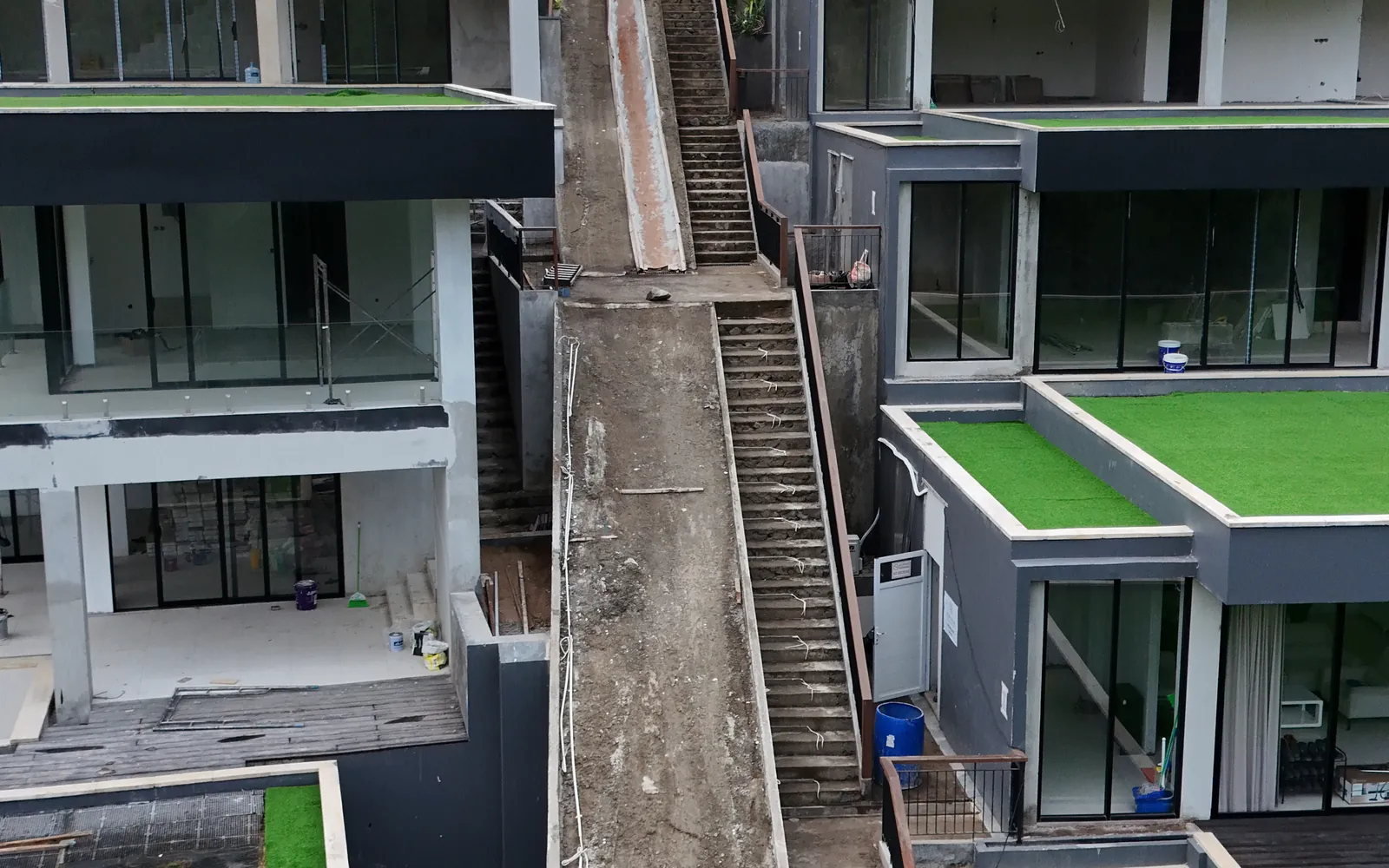
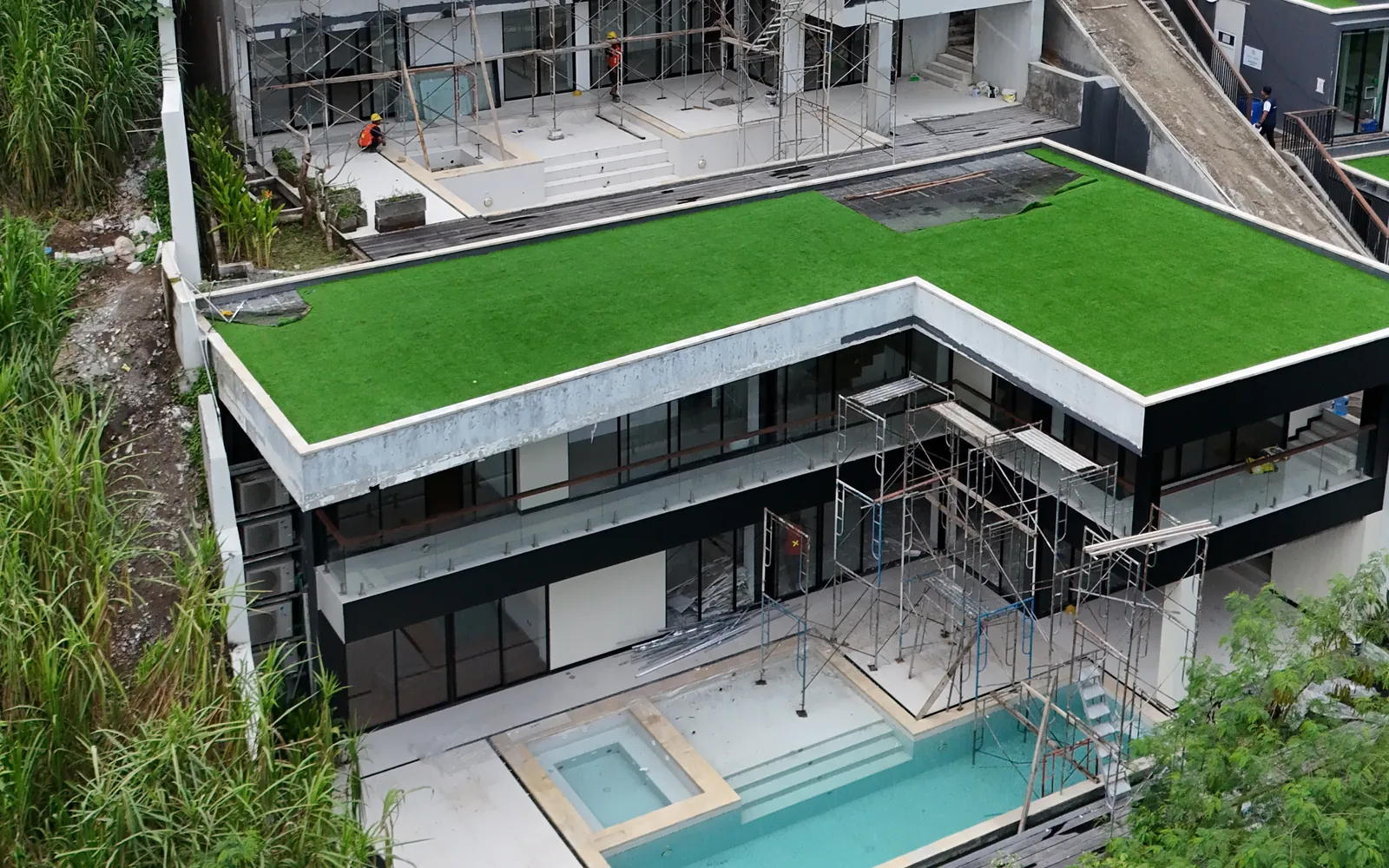
So the diligence load shifts onto you. You want payments tied to verifiable construction stages rather than calendar dates, a notary (PPAT) engaged independently of the seller, clear language on late handover, and a developer with finished, occupied projects you can visit. Puri Sidem is 16 residences by BFD (PT Bali Family Development), handover scheduled for July–September 2027 — ask what the contract says if that slips. The upside of the milestone structure is that you are not writing one large cheque into a hole in the ground: money moves when work is done.
What a turnkey villa actually includes
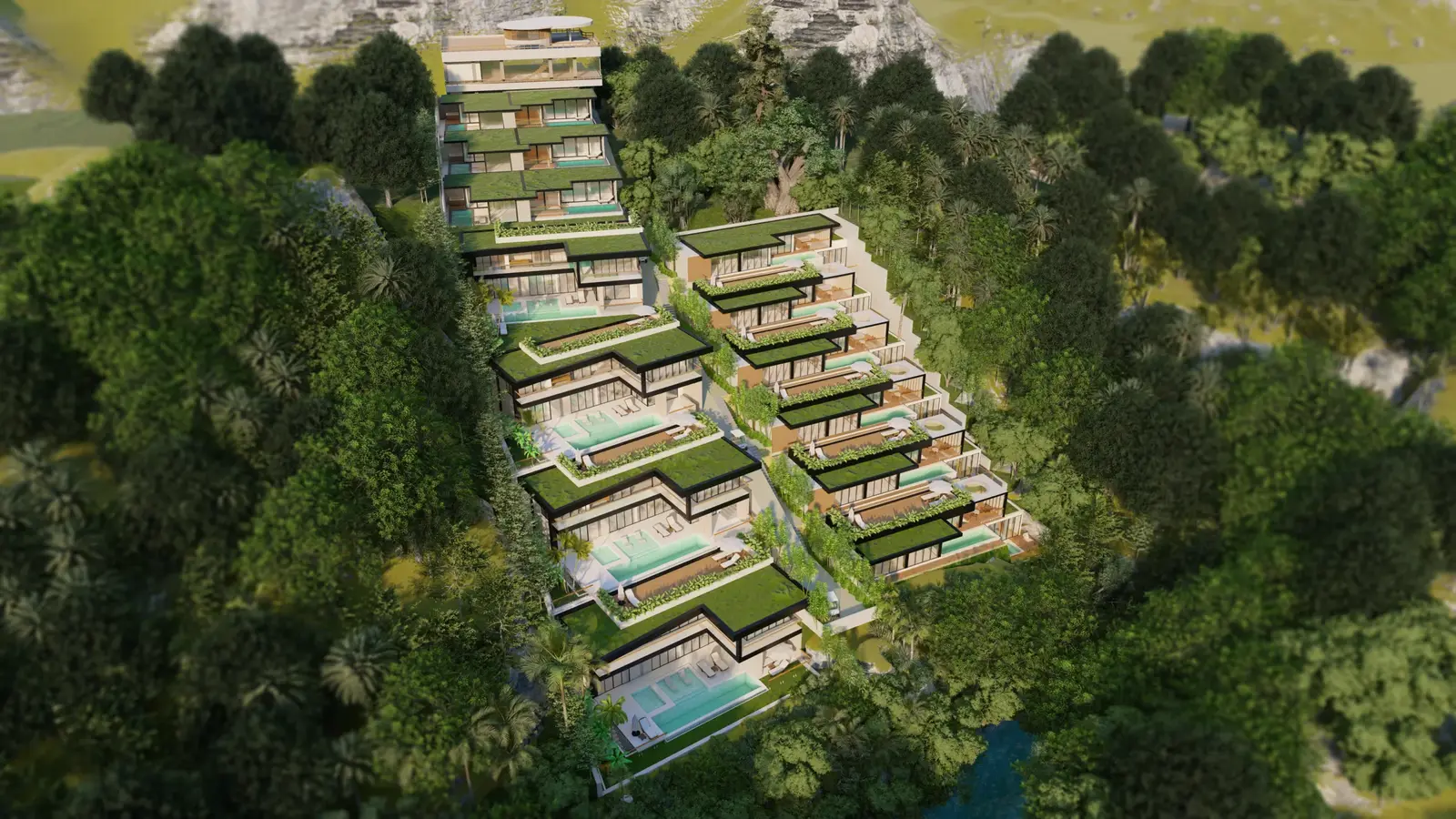
The one-bedroom residence at Puri Sidem has 103 square metres of total built area, a private pool and jacuzzi, ducted air conditioning, full furnishing and rental management already in place. It is turnkey — not a shell you then fit out. Above it sit the 287 m² two-bedroom and the 349 m² three-bedroom with its own elevator.
Location context: the site on Jl. Bangkiang Sidem in Keliki, Ubud, sits among the Mandapa Ritz-Carlton Reserve, Four Seasons Sayan, Capella Ubud and Amandari. Nightly rates in an area are set partly by the company that area keeps.
Three currencies at once
This is the exposure most first-time overseas buyers underestimate. The villa is priced in US dollars. It earns in Indonesian rupiah, because that is what guests and the management company transact in. You live, spend and are assessed in Australian dollars. Three currencies, and you are exposed to the movement between all of them.
Two things to plan for. On the purchase side, a swing in AUD/USD between signing and your final milestone payment changes what the villa costs in the currency you actually earn; staged payments spread that exposure across the build, which cuts both ways. On the income side, distributions converted from rupiah to Australian dollars will vary year to year even if local performance is flat.
None of this is a reason not to buy. It is a reason to model the deal in AUD as well as USD, compare a specialist foreign exchange provider against your bank's retail spread on large transfers, and sort the transfer mechanics before you are under a milestone deadline rather than during.
Tax and superannuation: separate conversations
Two topics come up in almost every Australian enquiry and both are too consequential to compress here. The first is tax: how rent earned overseas interacts with your Australian return, what happens on disposal, and how Indonesian withholding sits against it. The second is whether a self-managed super fund can hold an overseas leasehold asset at all — a question that turns on sole purpose, in-house asset and related-party rules and on how your fund is set up.
Each has its own article in this series, and neither substitutes for advice. Before signing anything, speak to an Australian accountant who has handled foreign property income, and to an SMSF specialist if super is in the picture. Nothing here is tax, financial or legal advice.
Due diligence checklist before you transfer a deposit
Work through this before money leaves your account. On the land: confirm the underlying certificate and that the party granting the lease is the party named on it, verify the zoning permits tourist accommodation, and check the building permit is issued for what is being sold. On the lease: the initial term, whether the extension is guaranteed and at what fixed price, and your rights to sublet, sell and pass the lease to your estate.
On the contract: tie payments to construction milestones rather than calendar dates, establish your recourse if handover is late, and read the management agreement as carefully as the purchase agreement — how distributions are calculated, what costs sit inside them, when they are paid, how the agreement can be terminated.
On the people: engage your own notary and Indonesian legal counsel, not the seller's. Ask for completed projects, go and see them, and speak to owners who have been through a handover. Confirm the receiving bank account through a separate channel before any transfer — payment redirection fraud is a live risk in cross-border property.
Then go there. Walk the site, drive the access road at the hour guests would arrive, and look at what is being built next door. A weekend in Ubud is the cheapest due diligence available on a decision of this size, and it is the advantage Australians have that buyers from further away simply do not.
Questions about your own situation?
Tell us what you are weighing up and we will come back with the detail you need: legal structure, timelines and which units are still available.
More guides
Investment Guide
Bali villa vs Australian investment property: an honest comparison
Most Bali villa marketing pretends the Australian option doesn't exist. Here's where an Australian investment property genuinely beats a Bali leasehold villa, where it doesn't, and how to work out which job you're hiring the asset to do.
Investment Guide
AUD, USD, IDR: the three-currency problem in Bali property
Buy a villa in Ubud from Sydney or Perth and you are running three currencies at once. Almost nobody walks you through what that actually means for the money that lands in your account.
Investment Guide
Buying Off the Plan in Bali vs Off the Plan in Australia
Most Australian buyers already understand off the plan. The trap is assuming the protections that come standard in Sydney or Brisbane also come standard in Ubud. They do not, and knowing exactly which ones are missing is the whole job.