Investment Guide
Buying Off the Plan in Bali vs Off the Plan in Australia
By Ilia Siniak, Founder, Bali Family Development
29 July 2026 · 8 min read
Most Australian buyers already understand off the plan. The trap is assuming the protections that come standard in Sydney or Brisbane also come standard in Ubud. They do not, and knowing exactly which ones are missing is the whole job.
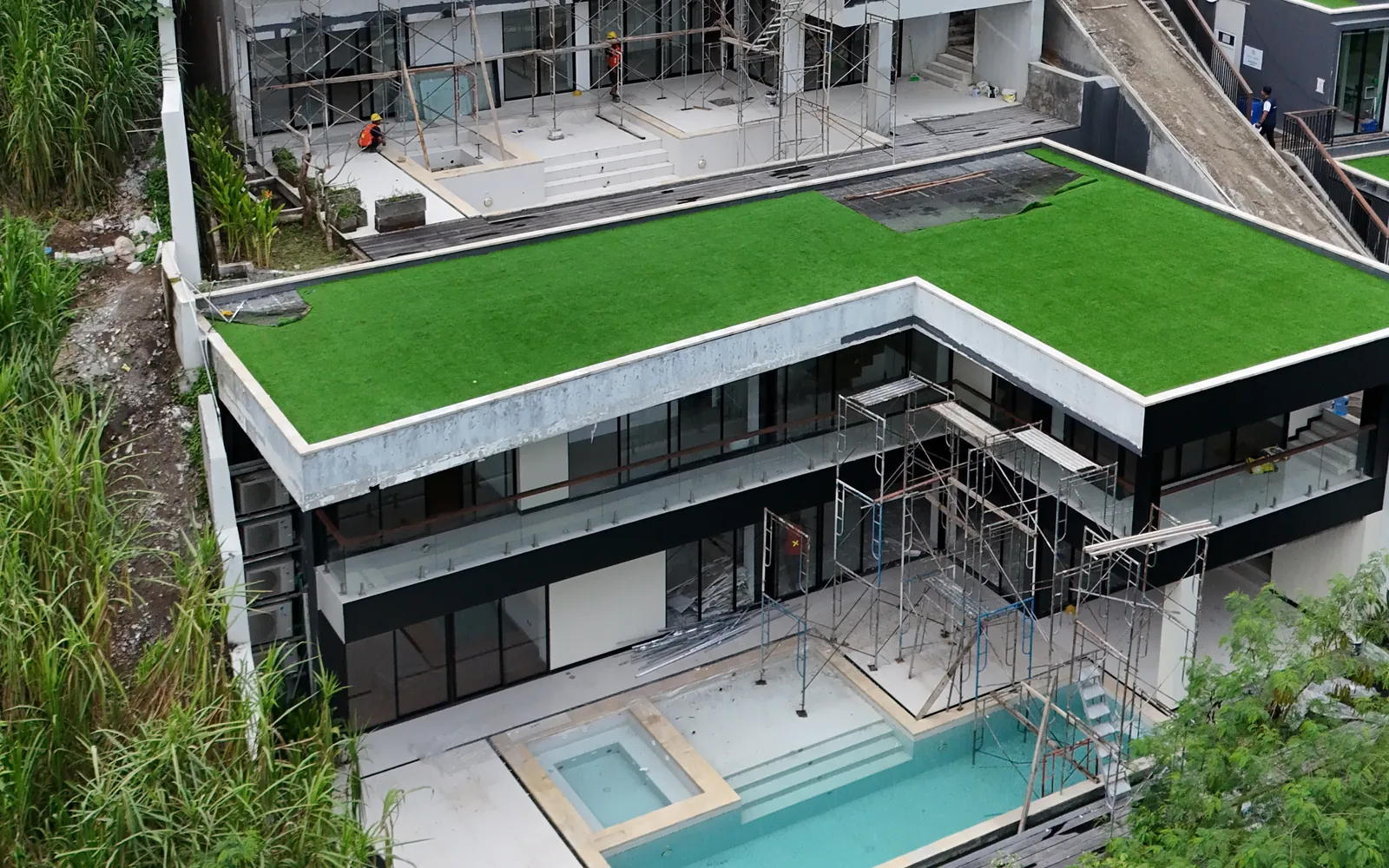
You already know how this works. That is the problem.
Off the plan is one of the few property terms Australians use without needing it explained. You have seen the display suite, signed the contract, paid a ten per cent deposit and waited two years for a set of keys. The model is familiar to the point of being invisible.
That familiarity is useful when you look at a project like Puri Sidem in Ubud, because the commercial logic is identical: you commit early, at a price fixed today, on a building that does not exist yet. The mechanics of the deal will feel like home.
The legal scaffolding around it will not. Australia has spent decades layering consumer protections onto off the plan sales, mostly in response to buyers getting burned. Those protections are creatures of state legislation and they stop at the water. Carry your Australian mental model to Indonesia unchanged and you will assume you are covered in places where you are simply not. This article is about which places those are.
| Typology | m² |
|---|---|
| 1 bedroom | 103 |
| 2 bedrooms | 237 |
| 2 bedrooms | 252 |
| 3 bedrooms | 349 |
What an Australian buyer takes for granted
Six things come more or less automatically when you buy off the plan in Australia. Name each one, because you will be looking for its equivalent later.
The contract of sale is long and heavily prescribed: state law dictates what must be disclosed, from the draft plan of subdivision to the strata by-laws and schedule of finishes, and bad disclosure often hands the buyer a right to walk. The cooling-off period is the short window after signing, typically a few business days depending on the state, in which you can rescind for a small penalty. It exists because these sales are often made under pressure in a display suite.
The deposit sits in a trust account held by the vendor's solicitor or agent. It is not the developer's money to spend, and it is released at settlement. That one mechanism is why an Australian buyer sleeps at night: if the project dies, the deposit is still sitting there. The sunset clause is the long-stop date by which the building must be finished and registered; miss it and either party can rescind. Reforms in New South Wales and Victoria have made it much harder for developers to use that clause to cancel and resell higher.
Finally, the pre-settlement inspection lets you walk through before handing over the balance and force defects to be rectified, and the builder's warranty, backed by statutory home warranty insurance in most states, gives you a claim if something fails afterwards.
What does not travel with you
Indonesia operates a different legal system with a different history, and there is no reason to expect it to mirror Australian state property law. The honest framing is structural rather than clause by clause: the machinery above was built for Australian conditions, and you should not assume a direct equivalent exists in Indonesia unless your own lawyer confirms it in writing for your contract.
Two differences matter most. The first is tenure. Foreigners do not buy freehold land in Indonesia. Puri Sidem is a leasehold: 27 years, with a guaranteed extension of 25 more for 15 per cent of the purchase price. You are buying a contractual right for a defined term, not a title in perpetuity, and the strength of that right lives in the document rather than in a Torrens register.
The second is where responsibility sits. In Australia most of your protection is automatic, imposed on the developer by statute whether they like it or not, and your conveyancer largely confirms the machine ran properly. In Indonesia far more of it has to be negotiated into the contract, verified by your own independent adviser and enforced by you. Diligence stops being a checkbox and becomes actual work.
That is not a reason to avoid the market. It is a reason to stop assuming and start asking.
So ask for the equivalents explicitly
Rather than hunting for an Indonesian copy of a New South Wales sunset clause, work backwards from what each Australian protection is for and require that outcome in your own agreement.
The trust account exists so your deposit is not funding someone else's cash flow: ask who holds staged payments and what evidence you receive. The sunset clause exists so delay has a consequence: ask what the contract says if handover slips six, twelve or twenty-four months, and whether that remedy is written or merely goodwill. The pre-settlement inspection exists so you do not pay the balance for unfinished work: ask what you may inspect, when, and what is withheld until defects are fixed.
Engage an independent Indonesian property lawyer who was not recommended by the seller, and have the notarial documents explained in English before you sign. If a developer resists any of that, you have learned something valuable at zero cost.
How it actually works at Puri Sidem
Puri Sidem is sixteen residences on Jl. Bangkiang Sidem in Keliki, Ubud, developed by PT Bali Family Development, from a 103 sqm one bedroom, through a 287 sqm two bedroom, to a 349 sqm three bedroom with elevator. Prices are quoted in US dollars and exchange rates move, sometimes sharply, so price your own currency risk.
Payments are staged against construction milestones rather than paid up front, so money is released as the build physically progresses. Handover is scheduled for July–September 2027.
As anywhere in the world, a staged payment schedule is only as good as the definition of its milestones and the identity of whoever signs them off. Vague milestones are worse than none. Ask to see them written out.

Turnkey is a genuine advantage, and it is not marketing
Here is where the Bali version beats the Australian one on its own terms. Buy off the plan in Melbourne or on the Gold Coast and the contract price buys a shell with a schedule of finishes. Furniture, appliances beyond the basics and landscaping are your problem: commonly tens of thousands of dollars of unbudgeted spend before a single tenant walks in. Dubai trained a generation of overseas buyers to expect the same gap, where handover often means bare walls and the fit out budget lands as a surprise after settlement.
Puri Sidem is delivered turnkey: fully furnished, appliances installed, ducted air conditioning, private pool and jacuzzi complete, managed rental in place. The advertised price is the finished residence producing income, not the starting point for a second budget. When you compare a Bali residence against an Australian unit dollar for dollar, that difference is real money and it belongs in the comparison.
Just make sure turnkey is contractual. A specification schedule listing what is actually included turns a brochure adjective into something you can enforce.
Execution risk is the risk that actually matters
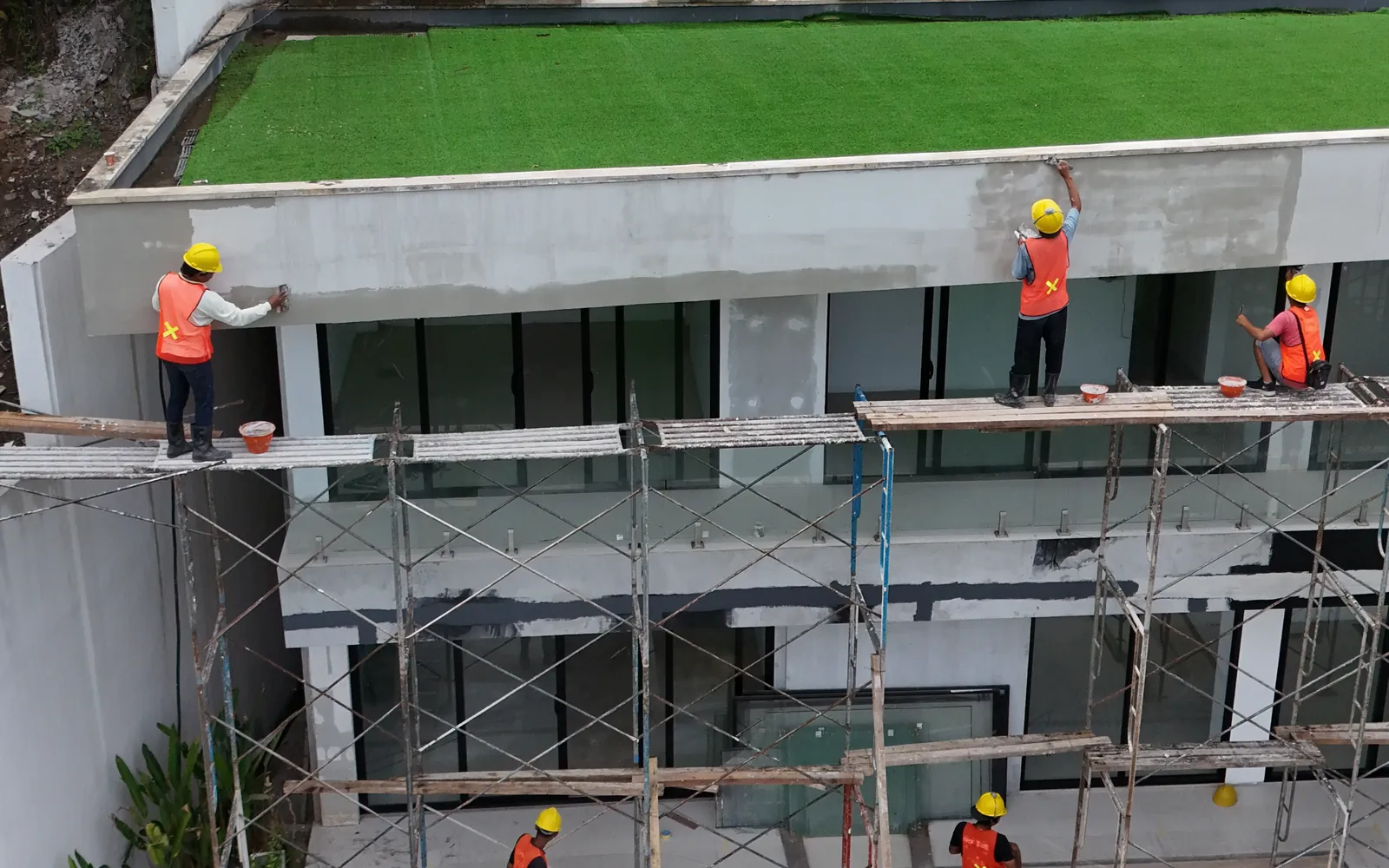
Strip away the legal comparison and the dominant risk in any off the plan purchase, anywhere, is the same: the building does not get built, or not on time, or not to the standard in the render. Australians who lived through the 2022 to 2023 construction insolvency wave know that is not theoretical even in a heavily regulated market.
The useful questions are practical, not legal. Who is the builder, as distinct from the developer, and what have they completed in Bali. Can you visit their finished projects and speak to owners who have been through handover. What stage is the site at today, and can you see dated photographs tied to the milestone you are being asked to fund. Who inspects progress on your behalf when you are in Perth and the site is in Gianyar.
Then push on the uncomfortable ones. What happens if September 2027 becomes March 2028. Does the rental programme start from the contracted handover date or from actual handover, because those diverge badly if the project runs late. Does the management agreement have a term, and can you exit it.
A developer with a real track record answers all of that calmly, because they have been asked before. Evasiveness is the signal.
Checklist before you sign
Work through this before signing. Anything you cannot tick is a question, not necessarily a dealbreaker.
One, is the lease term and the 25 year extension mechanism, including its 15 per cent cost, written into the contract rather than described verbally. Two, is the payment schedule tied to defined, verifiable milestones with documentary evidence at each stage. Three, who holds funds between payment and completion. Four, what is the written remedy for delay past September 2027. Five, is there a specification schedule covering furniture, appliances, ducted air conditioning, pool and jacuzzi.
Six, do you have inspection rights before final payment, and can you withhold funds against a defects list. Seven, what defects rectification period applies after handover, and who honours it. Eight, how exactly are owner distributions calculated, what is netted off, and who bears vacancy. Nine, what happens at the end of the lease. Ten, has every document been reviewed by an independent Indonesian lawyer you chose yourself.
Plan the Australian side too. Ask your accountant how rent earned overseas and any eventual capital gain sit against your Australian tax position, and note that overseas residential property is not something an SMSF holds without careful advice. Bali has no stamp duty in the Australian sense, but Indonesian transaction costs exist, so ask for the full landed cost rather than the headline price.
The honest summary
Buying off the plan in Bali gives you something Australia mostly cannot at these price points: a finished, furnished, income producing villa among neighbours like the Mandapa Ritz-Carlton Reserve, Four Seasons Sayan, Capella Ubud and Amandari.
It also asks more of you. Fewer automatic protections, a leasehold rather than a title, and diligence you perform actively rather than receive passively. The upside is priced accordingly, which is exactly what you would expect.
If you have bought off the plan at home, you already have the right instincts. Use them, then go one level deeper on the questions above. A developer worth your money will treat that as a reasonable place to start.
Questions about your own situation?
Tell us what you are weighing up and we will come back with the detail you need: legal structure, timelines and which units are still available.
More guides

Investment Guide
Can an Australian SMSF hold overseas property? What to understand first
It is one of the most common questions Australians ask about offshore property, and one of the easiest to get wrong. Here is the factual groundwork — the concepts, the sticking points, and the questions to take to a licensed adviser.

Investment Guide
Rent earned overseas and the ATO: what Australian investors need to understand
Rent earned overseas is not invisible to the ATO. A plain-language map of the concepts behind rent earned overseas, and the questions to take to a registered tax agent.
Investment Guide
The Pre-Deposit Due Diligence Checklist for Bali Villa Investors
A comprehensive pre‑deposit due‑diligence guide for international investors targeting Puri Sidem’s leasehold villas in Ubud, covering title verification, permits, contracts, financial modeling, and post‑handover management.