Investment Guide
Bali villa vs Australian investment property: an honest comparison
By Ilia Siniak, Founder, Bali Family Development
29 July 2026 · 7 min read
Most Bali villa marketing pretends the Australian option doesn't exist. Here's where an Australian investment property genuinely beats a Bali leasehold villa, where it doesn't, and how to work out which job you're hiring the asset to do.

Two assets, two different jobs
You're probably weighing a townhouse in a growth corridor, or a unit in a capital city, against something like Puri Sidem in Ubud. Fair comparison, but they aren't the same instrument. One is a leveraged, perpetual, AUD-denominated capital growth play that you have to run. The other is an unleveraged, finite-term, USD-denominated income play that somebody else runs.
This article comes from the developer's side of the table, so read it accordingly. What we've tried to do is set out the axes where the Australian property clearly wins rather than skip past them.
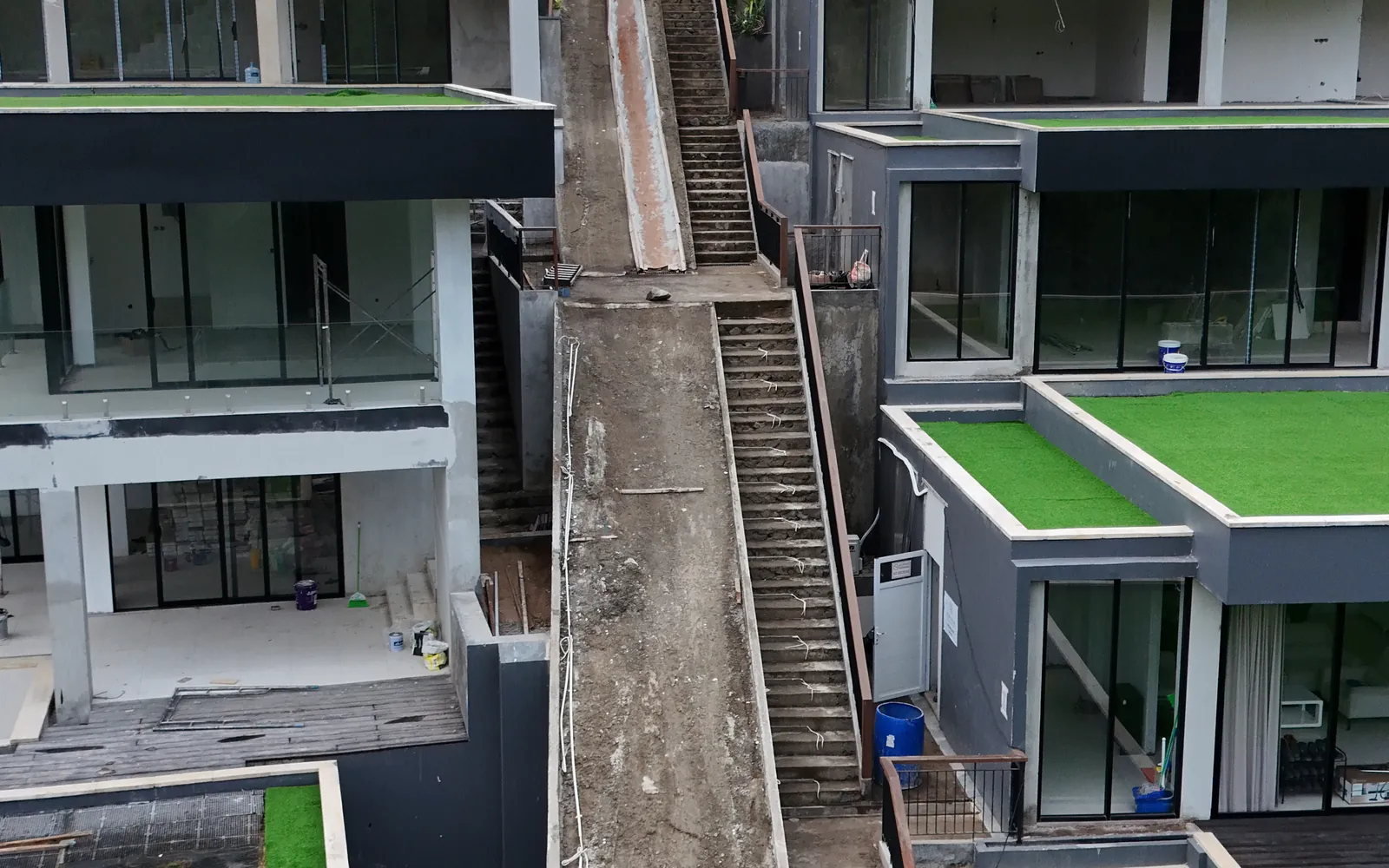
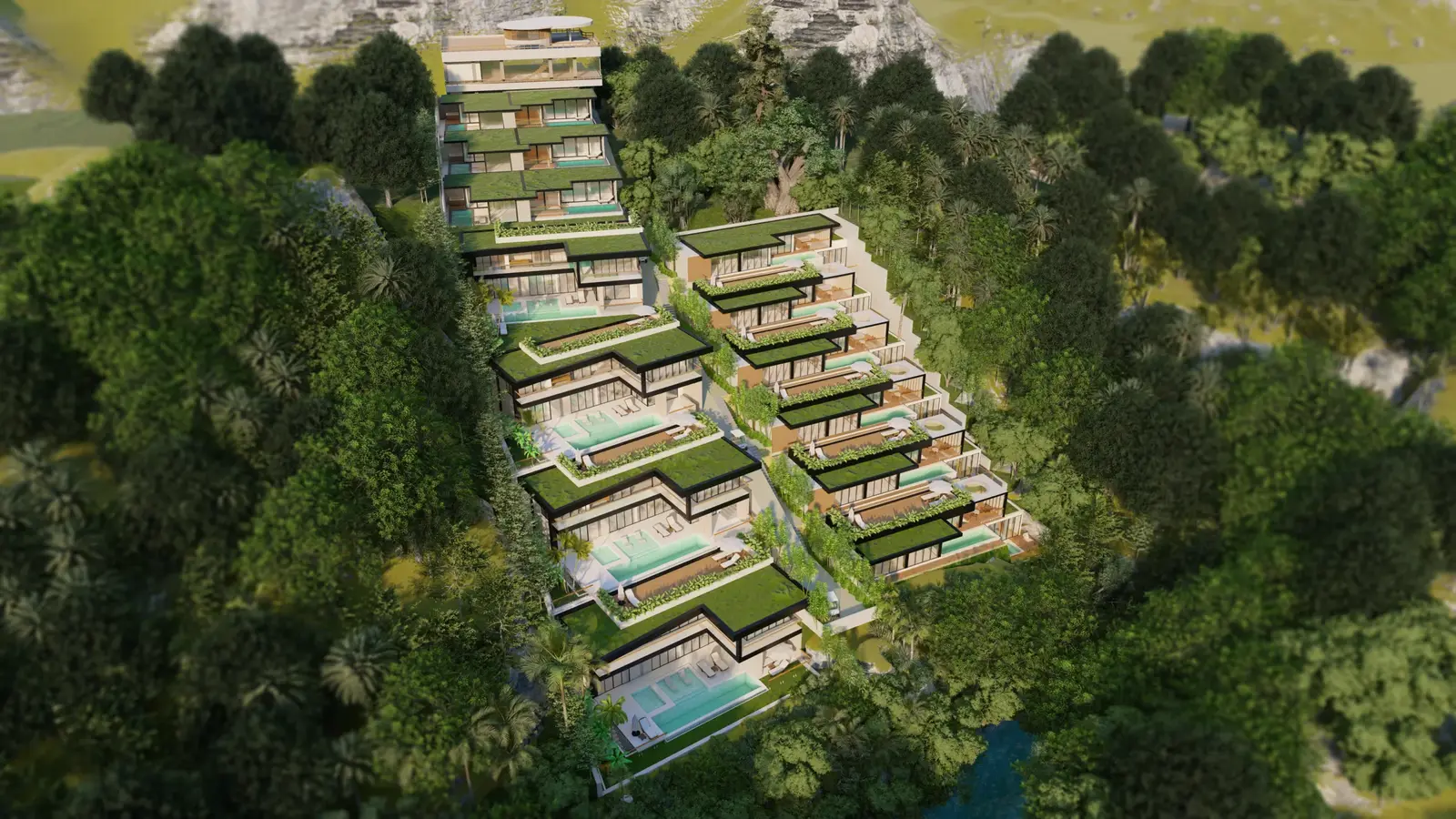
For context: Puri Sidem is 16 turnkey residences on Jl. Bangkiang Sidem, Keliki, Ubud, developed by BFD (PT Bali Family Development). A 1BR is 103 sqm, a 2BR 287 sqm and a 3BR 349 sqm. It's sold off the plan with handover in July–September 2027.
Ownership: perpetual freehold vs a 27-year lease
This is the clearest advantage the Australian property has, and there's no arguing around it. Freehold under Torrens title is perpetual. You hold it, your estate holds it, your children hold it. The term never runs down.
Indonesia doesn't allow foreign nationals to hold that kind of title. Puri Sidem is a 27-year leasehold with a contractually guaranteed 25-year extension for 15% of the purchase price. The extension is payable at year 28 rather than now.
In practice the asset amortises. An Australian house at year 20 is a 20-year-old building on land with an indefinite life, and the land does most of the work. A Bali lease at year 20 has 33 years left and is worth what a buyer will pay for 33 years of income, not what you paid for 53. That drag accelerates late in the term. Resale follows from it: you'd be selling the remaining term to another foreign investor running the same arithmetic, and that buyer pool is thinner than the pool of Australians who might buy your house in Geelong.
So if permanence and passing land down matters most, buy the Australian freehold. Leasehold rewards income now, not perpetuity.
Capital in: leverage on one side, cash on the other
The second real advantage also sits with the Australian property. A lender will typically fund a large share of the purchase, so you put in a deposit plus costs and the bank contributes the rest. That leverage matters more than most people credit: capital growth accrues on the full asset value, not just your equity.
There's no local mortgage available to foreign buyers over this kind of Indonesian leasehold. Purchase is cash, normally staged against construction milestones through to handover. Buying a 1BR means genuinely finding the full purchase price, in USD, from savings, an offset, an equity release against Australian property, or a sale. No multiplier, and no bank credit team quietly sanity-checking the asset for you. Some buyers reintroduce leverage by drawing down against Australian equity, which is legitimate but puts an Australian asset behind an offshore one. That's a conversation for your broker.
For balance: leverage cuts both ways. It magnifies losses as efficiently as gains, and a geared Australian property often runs at a cash flow deficit for years, which is the premise of negative gearing. An unleveraged asset has a different risk shape, not automatically a worse one. But the flexibility belongs to the Australian side.
Entry costs: stamp duty vs the lease structure
Stamp duty is the largest single acquisition cost on an Australian investment property. What you pay depends on your state or territory, the price, your buyer status and whether a foreign purchaser surcharge applies. We're deliberately not quoting percentages, because they differ by jurisdiction and change with each state budget. Use your own state revenue office calculator. On top sit conveyancing, building and pest, loan establishment, possibly lenders mortgage insurance and registration, and most of it isn't borrowable.
The Bali side has no state stamp duty because there's no state. Costs sit in the lease structure instead: notary and PPAT fees, lease-related Indonesian taxes, and due diligence on the underlying land title, zoning and building permits. Budget for an independent Indonesian lawyer of your own choosing rather than the vendor's, and treat anyone who discourages that as a red flag. Pencil in the year-28 extension at 15% of price as a known future cost.
Compare whole-of-entry cost against whole-of-entry cost, not headline price against headline price.
Management: who actually does the work
With an Australian investment property you either self-manage or pay a property manager a percentage of rent. Even paying, you sign off on repairs, wear arrears and vacancies, handle inspections and turn up at the tribunal. Run an Australian holiday home as short-stay and it isn't passive income at all, it's a small hospitality business with your name on it.
Puri Sidem is sold turnkey: fully furnished, ducted air conditioning, private pool and jacuzzi in every residence, rental managed on your behalf. You receive distributions and don't take phone calls.
The cost of that is control. You don't set nightly pricing, choose the distribution channels or decide the maintenance standard. You're buying an operator as much as a building, and across a 27-year term with its guaranteed extension the operator's competence will matter more than the tiles. Judge the management as carefully as the villa.
Currency risk: one side has none
An Australian investment property collects rent in AUD, services debt in AUD and sells in AUD. Currency exposure is zero. That's a genuine, unglamorous advantage and it costs you nothing.
A Bali villa is priced in USD, operates partly in IDR, and you spend in AUD. Three currencies in one asset. A move in AUD/USD changes your effective purchase price before you've even settled, and changes the AUD value of every distribution afterwards.
That's not a reason to rule Bali out, but it is a reason to size the position sensibly. Some investors deliberately want income that isn't tied to the Australian dollar and the local property cycle, and treat it as diversification. Others want nothing to do with it. Both are defensible. Pretending the exposure isn't there is not.
Tax and capital growth: the parts we won't oversell
Tax deserves its own article and gets one. Capital gains tax and the CGT discount, negative gearing, land tax, foreign sourced income, Indonesian withholding and whether an SMSF can hold an offshore leasehold at all are questions for your accountant with your circumstances in front of them. Anyone giving you a confident blanket answer on SMSF eligibility for offshore leasehold should be treated with suspicion.
On capital growth, neither option comes with a promise and you shouldn't accept one. Australian residential property has a long record of growth, but a record isn't a forecast, and entry prices, rates and policy all shape what comes next.
The Bali side carries a structural point against it: a finite-term asset faces a headwind on capital value as the term winds down, whatever the market does. If your thesis is capital growth and generational wealth, Australian freehold has the better story and we won't pretend otherwise. If your thesis is income now rather than capital growth, the logic flips.
Who each one actually suits
An Australian investment property makes more sense if you want to use leverage and let a bank fund most of the asset; if you're buying for long-term capital growth and intend to hold or pass it on; if negative gearing and the CGT discount are central to your plan; if you want no currency exposure; or if you simply want to drive to the thing you own.
A Bali villa makes more sense if you're sitting on cash earning little and want it working; if income over the next decade matters more than terminal value in 2079; if you want genuinely passive rather than landlording; if you accept a finite-term asset and price it accordingly; and if you actively want exposure outside the Australian dollar.
There's no universal winner, and any article claiming one is selling something. The more useful question is what you want this parcel of capital to do, and over what horizon. Answer that first, then interrogate the term, the operator and the tax treatment before you look at a single photograph of a pool. Whichever way you lean, use independent Indonesian legal counsel on the lease, your own accountant on the tax, and your own numbers rather than anyone's brochure, including this one.
Questions about your own situation?
Tell us what you are weighing up and we will come back with the detail you need: legal structure, timelines and which units are still available.
More guides
Investment Guide
AUD, USD, IDR: the three-currency problem in Bali property
Buy a villa in Ubud from Sydney or Perth and you are running three currencies at once. Almost nobody walks you through what that actually means for the money that lands in your account.
Investment Guide
Buying Off the Plan in Bali vs Off the Plan in Australia
Most Australian buyers already understand off the plan. The trap is assuming the protections that come standard in Sydney or Brisbane also come standard in Ubud. They do not, and knowing exactly which ones are missing is the whole job.
Investment Guide
Can an Australian SMSF hold overseas property? What to understand first
It is one of the most common questions Australians ask about offshore property, and one of the easiest to get wrong. Here is the factual groundwork — the concepts, the sticking points, and the questions to take to a licensed adviser.