Investment Structure
Contracts Over Promises: How a Bali Villa Investment Is Actually Secured
By Ilia Siniak, Founder, Bali Family Development
30 July 2026 · 6 min read
A deep dive into how Puri Sidem’s leasehold, management contract, and 52‑year term protect international investors from marketing hype and deliver a legally enforceable Bali villa investment.

Marketing Language vs. Contractual Obligation
In Bali’s luxury residential market, adjectives such as “guaranteed” or “exclusive” are often employed as persuasive tools rather than legal promises. At Puri Sidem — Private Residences Collection, the only statements that survive scrutiny are those embedded in two binding documents: the lease and the rental‑management agreement. These contracts translate marketing flair into enforceable rights and duties, removing ambiguity for investors who require certainty before committing capital.
For an analytical investor, the distinction is simple yet profound: a marketing estimate is a projection that fluctuates with market sentiment, while a contractual obligation is a fixed commitment owed by a specific counter‑party. Consequently, due‑diligence shifts from asking “does the forecast look realistic?” to asking “who is legally bound, under which document, and what are the consequences of non‑performance?”. This reframing narrows risk to the enforceability of the agreement rather than the optimism of a sales brochure.
A common pitfall among first‑time international buyers is to treat promotional language as a de‑facto guarantee. When promotional material makes a multi‑year promise, the investor must verify that the management agreement actually stipulates the payment schedule, how revenue is split, and the remedies if the operator falls short. Only clauses that survive a contract‑law test can be relied upon for financial modelling.
The Legal Architecture Behind the Investment
Puri Sidem is structured on a 27‑year leasehold, with a pre‑negotiated extension of an additional 25 years exercisable for 15 % of the purchase price. This creates a total usable term of 52 years, a horizon that aligns with multi‑decade investment strategies and provides a clear framework for both letting and eventual resale. The extension right is codified in the lease deed, not in a side letter, ensuring that the option is legally binding and enforceable.
Layered atop the lease is the rental‑management agreement, which details the owner’s cash‑flow expectations, the timing of distributions, and the operator’s obligations to maintain service standards. The agreement enumerates every cost that the operator absorbs—marketing, housekeeping, and property insurance—so that the owner’s net receipt is transparent. It also defines default triggers, cure periods, and liquidated damages, giving the owner a clear recourse if the operator fails to meet the agreed schedule.
BFD — Bali Family Development — serves simultaneously as the developer and the operating entity. This dual role eliminates the classic “finger‑pointing” scenario where a separate management company could claim limited liability for construction defects or operational shortfalls. By consolidating development and management under one corporate umbrella, BFD aligns incentives, simplifies dispute resolution, and provides investors with a single, accountable point of contact throughout the life of the investment.
From Handover to Operation
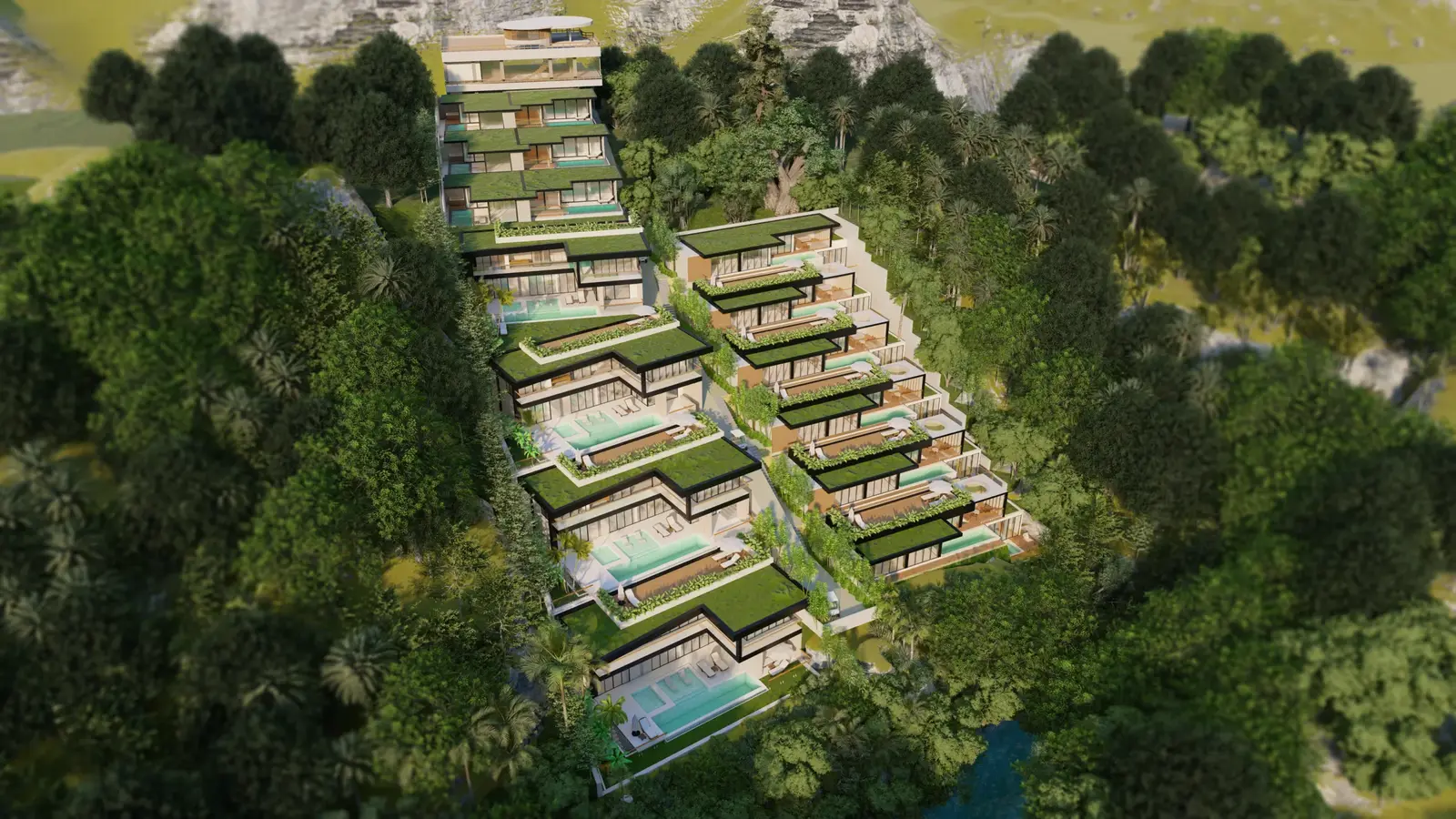
The handover of all 16 villas—comprising one‑, two‑ and three‑bedroom units, each with a private pool—is slated for July–September 2027. At that moment, the legal title under the 27‑year lease is transferred to the owner, and a comprehensive handover checklist is executed: cadastral verification, utility registration, and a condition‑report signed by both parties. This systematic process ensures that the buyer receives a villa that matches the specifications outlined in the prospectus.
Immediately following handover, the rental‑management agreement becomes operative. The owner’s first payment calendar is triggered, typically on a quarterly basis, and the operator assumes responsibility for guest acquisition, housekeeping, and revenue reporting. BFD provides an online portal where owners can monitor occupancy rates, revenue streams, and expense breakdowns in real time, reinforcing transparency and allowing investors to validate performance against the contractual baseline.
The transition from construction completion to active rental is supported by a dedicated transition team that coordinates interior fit‑out, branding of the villa, and staff training. This team also ensures that all statutory permits—such as the tourism licence and the local building compliance certificate—are in place before guests are welcomed, thereby protecting the owner from regulatory interruptions that could affect cash flow.
Why the Long Lease Horizon Matters
A 52‑year lease term transforms a short‑term promotional offer into a genuine, long‑run asset. The guaranteed 25‑year extension creates a runway that accommodates multiple rental cycles, market corrections, and even potential re‑positioning of the portfolio without the pressure of an imminent lease expiry. For investors, this translates into a stable income stream that can be modelled with confidence over several decades.
From a resale perspective, the remaining lease term becomes a quantifiable component of the villa’s market value. Buyers in the secondary market assess the length of the lease, the strength of the extension clause, and the historical performance of the management agreement. A longer, secure lease typically commands a premium because it reduces the perceived risk of lease‑termination and enhances the asset’s attractiveness to future owners.
In contrast, projects built on 10‑ or 15‑year leases often face steep depreciation as the expiry date approaches, forcing owners to renegotiate terms under less favourable market conditions. The architecture at Puri Sidem avoids that pitfall by embedding the extension right at the outset, thereby insulating the investment from the volatility that shorter lease structures inevitably encounter.
Critical Questions Every Investor Must Verify
Before signing, the investor should confirm that the owner‑payment schedule is itemised down to the last line item: management fee, marketing contribution, insurance, and any ancillary services the operator absorbs. This granularity prevents hidden cost leakage and enables precise cash‑flow modelling. The contract should also specify the currency of payments and the mechanism for adjusting fees, if any, over the lease term.
Equally important is the definition of default remedies. The management agreement must spell out the events that constitute a breach, the cure period afforded to the operator, and the penalties—whether monetary or in the form of accelerated payment rights—if the operator fails to remedy the breach within the stipulated timeframe. These clauses are the legal safety net that protects the owner’s revenue expectations.
Finally, the 25‑year extension must be recorded as a binding option within the lease deed, not merely as a letter of intent. The lease should detail the exact exercise procedure, the valuation method for the 15 % extension fee, and the timeline for payment. BFD provides a step‑by‑step guide for exercising this right, ensuring that owners can secure the additional term without renegotiating the entire lease.
Tax and Regulatory Outlook for International Investors
Indonesia permits foreign investors to hold leasehold interests up to 70 years, with the 27 + 25‑year structure comfortably fitting within that framework. The leasehold model offers a clear separation between land ownership (retained by the Indonesian government) and the right to use and develop the property, which is the preferred structure for non‑resident buyers. Annual land and building taxes are calculated on the lease value, and BFD assists owners in coordinating with local tax advisors to ensure compliance.
Beyond land tax, owners must consider the hotel‑tax regime that applies to stays sold through the management programme. The operator withholds the applicable tax at source and provides an annual statement for the owner’s personal tax filing in their home jurisdiction. BFD’s compliance team stays abreast of regulatory updates—such as changes to the foreign investment law—and proactively informs owners, minimizing the risk of unexpected fiscal exposure.
Questions about your own situation?
Tell us what you are weighing up and we will come back with the detail you need: legal structure, timelines and which units are still available.
More guides

Investment Guide
The Pre-Deposit Due Diligence Checklist for Bali Villa Investors
A comprehensive pre‑deposit due‑diligence guide for international investors targeting Puri Sidem’s leasehold villas in Ubud, covering title verification, permits, contracts, financial modeling, and post‑handover management.
Investment Insights
Ubud Wellness Tourism and Off-Season Occupancy: A Deep Dive for International Investors
This article explores the nuances of wellness tourism in Ubud, particularly focusing on how off-season occupancy is influenced, the transformative role of integrated wellness facilities, and essential questions for Australian owners to ask their rental managers regarding seasonality.

Investment Guide
The 27 + 25 Year Leasehold in Bali, Explained: What a Foreign Buyer Actually Holds
Foreigners cannot hold freehold land in Indonesia, so almost every Bali villa sold abroad is leasehold. Here is what that means, why 'guaranteed' is the word to look for, and five things to check before you sign.